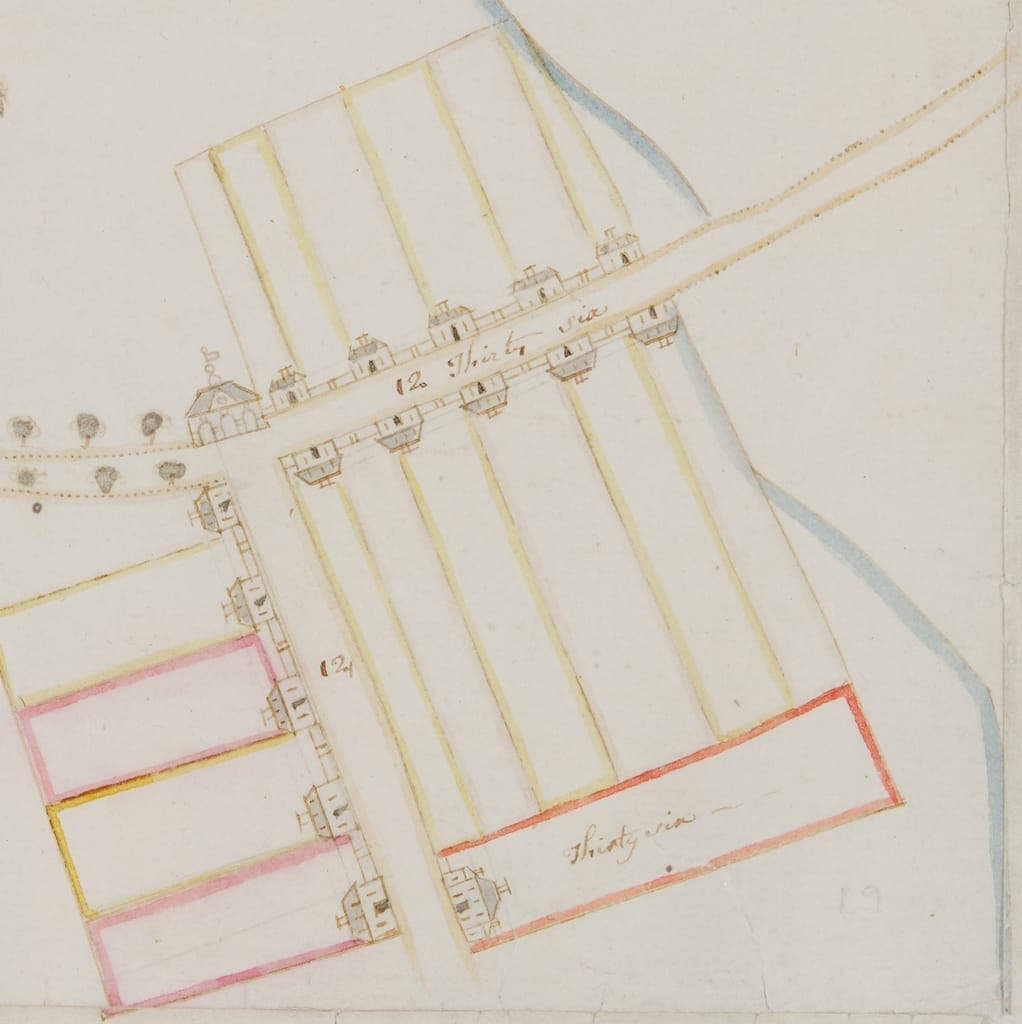
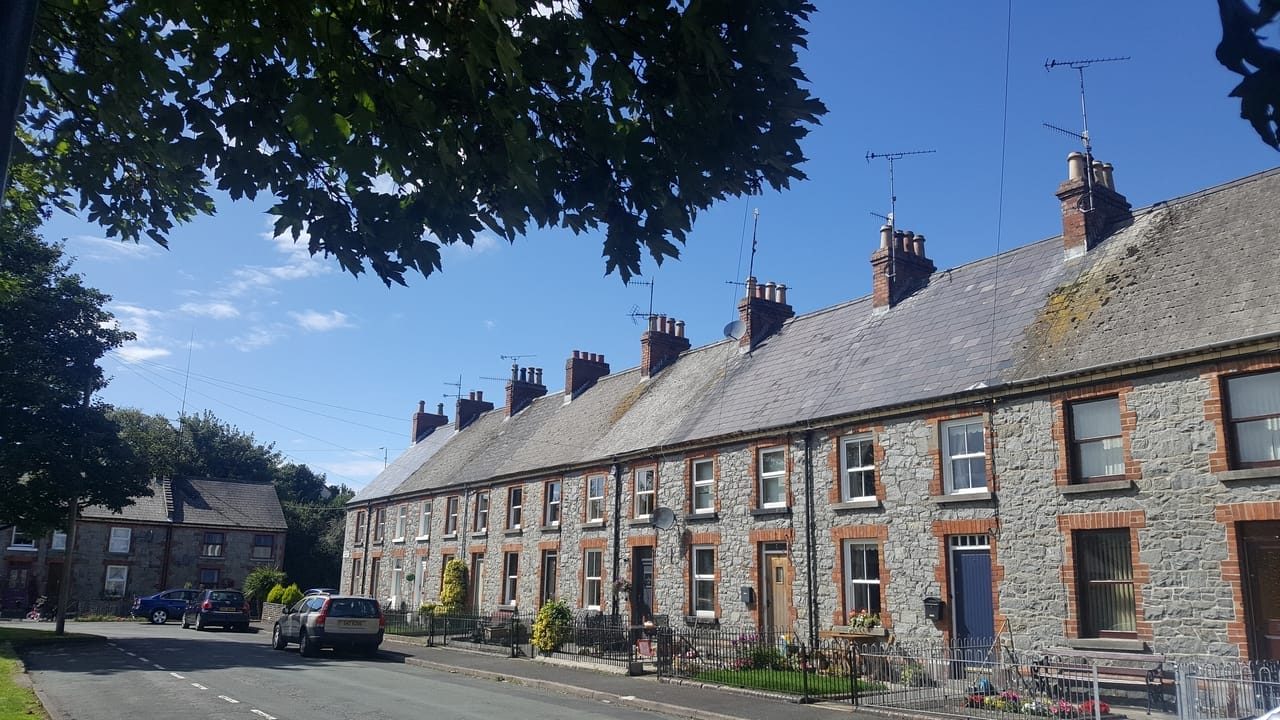
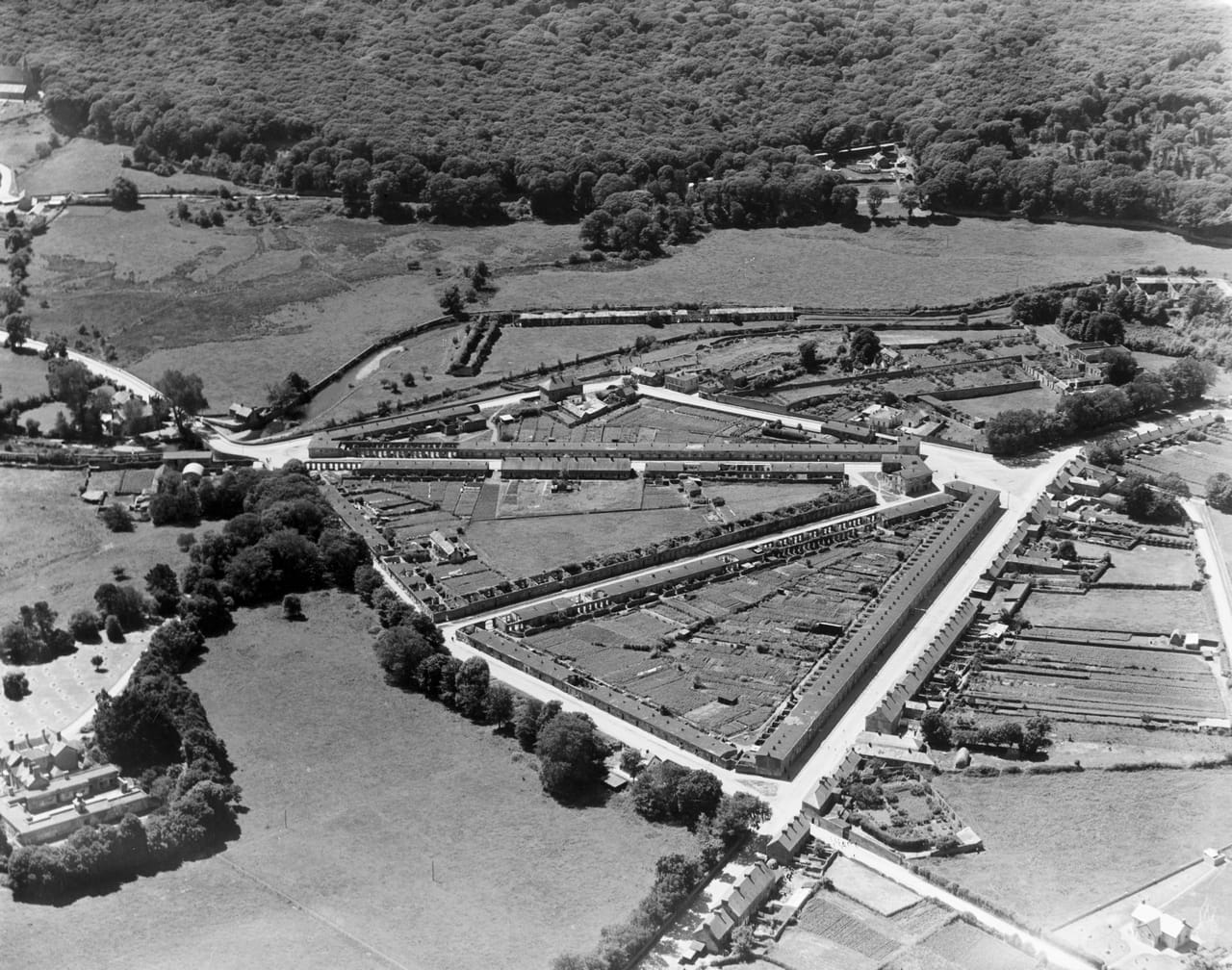
While the demesne gates are swapped for factory gates, there are certain parallels in the ground plan with the proposal at Villierstown: specifically, the axial routes, the rhythm of the terraces, and the ratio between house and garden. The utopian ambition of these industrialists was ideological and sometimes flawed; perhaps too speculative, too tightly bound up in a moral code. But equally it was optimistic and expectant, driven by a social consciousness to work towards a common goal for a better space. When a world is constructed with the aim of shaping others to conform to a particular and personal vision, there turns out to be much more to it than just that vision. In these later Irish villages, it was intended to create an improved environment that was non-sectarian and non-denominational despite the doctrine of its founders. These were important foundations to build upon.
Szymborska hints at a kind of control and containment too when she describes the artificial stillness of a map; its flatness juxtaposed with the vibrant world it represents, and its complexity distilled into two dimensions for our convenience:
Flat as the table
it’s placed on.
Nothing moves beneath it
and it seeks no outlet.
Above – my human breath
creates no stirring air
and leaves its total surface
undisturbed.(6)
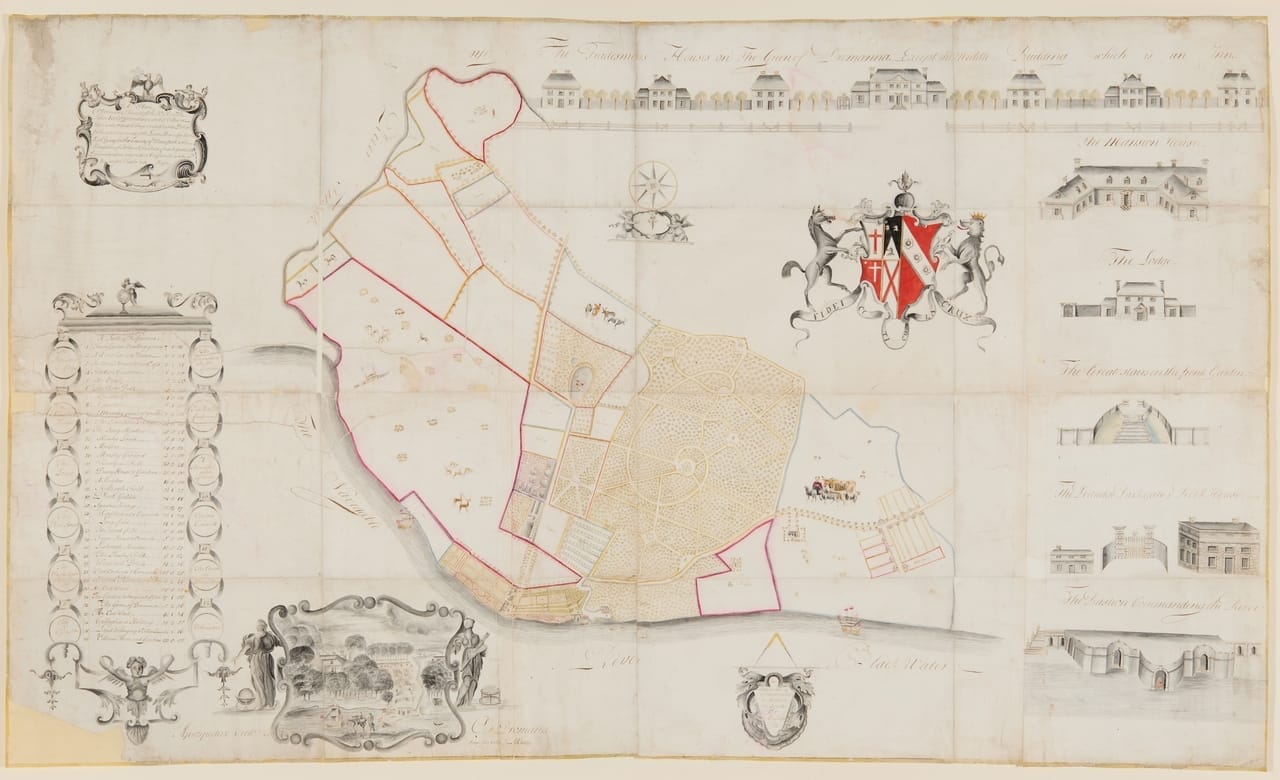
Luckily for us, the Plan of Dromana has also been flattened; its original manuscript form – once folded into sixteen linen-backed pieces – has been opened up, conserved and framed behind glass for public display. The historical artefact is reconstructed as an artwork; not just a geographical document but a unique visual record of the habitus of a particular culture and time.
Footnotes:
1 Wisława Szymborska, Map: Collected and Last Poems, trans. Clare Cavanagh (New York, 2016), 432.
2 Anne Casement, ‘Henry Jones’ 1751 plan of Dromana and its place in the cartographic history of Ireland’, The Local Historian: Journal of the British Association for Local History, Vol. 49, No. 4 (October 2019), 301-316.
3 Edward McParland, Public Architecture in Ireland, 1680-1760 (New Haven & London, 2001), pp. 23-4.
4 For a fuller account see Livia Hurley and Kevin Whelan, ‘Planning of Towns and Villages from the Seventeenth to the Nineteenth Century’, Rolf Loeber, Hugh Campbell, Livia Hurley, John Montague and Ellen Rowley eds, Architecture, 1600-2000: Art and Architecture of Ireland, Vol. IV, (New Haven & London, 2014), 393-97; and Valerie Mulvin, Approximate Formality: Morphology of Irish Towns (Dublin, 2021).
5 Louis Cullen, The Emergence of Modern Ireland, 1600-1900 (London, 1981), 72-76.
6 Wisława Szymborska, Map: Collected and Last Poems, trans. Clare Cavanagh (New York, 2016), 432.
Livia Hurley is a graduate of the School of Architecture at TU Dublin and has a PhD in architectural and urban history from University College Dublin. Her practice encompasses research, writing, conservation and teaching, and she has lectured and published widely on architecture in Ireland.