Skip to content
  • Catalogue
  • Dictionary of Irish Architects
  • Catalogue
  • Dictionary of Irish Architects
Menu

Menu

Homepage
>
Exhibitions
>
Paddy Healy’s Dublin

Paddy Healy's Dublin

21 April – 29 May 2026

First Floor Rooms

Free

Photograph of Blackhall Street, Dublin, takenn by Paddy Healy in 1964. Blackhall Street was laid out in 1782 to create a vista of the Blue Coat School and was completed by 1800. None of these houses inthe photograph survived the street's redevelopment.

At the end of the Second World War… the city of Dublin stood poor, materially exhausted, but substantially intact… Between the end of the War and the end of the 20th century, this city was substantially destroyed. Niall McCullough, Dublin – Creation, Occupation, Destruction (Dublin, 2023), 4.

One of the places where the lost Dublin Niall McCullough refers to can still be glimpsed is in the photographs of the city taken in the 1950s and 1960s by Paddy Healy.

Born in 1916, Patrick (Paddy) Healy studied building construction in Bolton Street, a course which included both land surveying and technical drawing. After graduation, he took classes at night under Seán Keating in NCAD while working as a silkscreen printer by day, and served in the Irish army during World War II. In 1949 he joined the Land Commission as a surveyor, moving on to the Forestry Division of the Department of Lands in 1955. Having volunteered on archaeological sites during his holidays, he eventually left the security of the Forestry Division in the late 1960s to pursue a full-time career in archaeology, working as surveyor and draughtsman on excavations at High Street, Winetavern Street, Christchurch Place and Wood Quay. As a professional archaeologist, he would go on to carry out several excavations including the Viking cemetery at Islandbridge and the burial ground at Bully’s Acre, Kilmainham.

Throughout his archaeological career, Healy used photography as a recording tool and in 2001, one year after his death, his photographic collection came to the Irish Architectural Archive. It amounts to c. 3,000 images and includes extensive coverage of Dublin, as well as archaeological sites and national monuments across Ireland.
Healy’s eye was sharp, his knowledge extensive, his images focused and his subject matter telling. The Dublin streetscapes he captured – some romantic, some desolate – evoke a sense of those qualities which the late Niall McCullough noted were lost over the course of the second half of the 20th century, ‘the density and legibility of the city – its statement, its singular nature’.
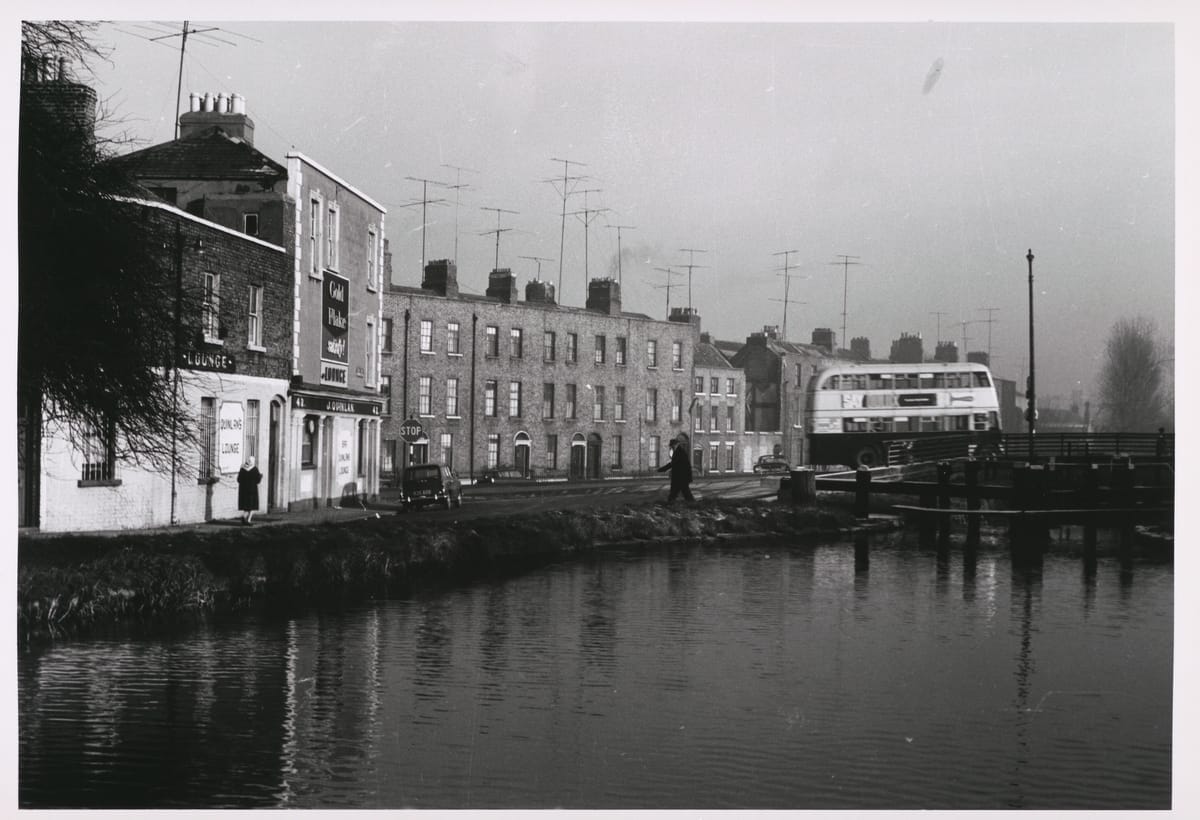
Photograph of Charlemont Place, Dublin, taken by Paddy Healy in 1964. The houses on Charlemont Place, with their proliferation of television aerials, no longer exist. The pub, however, survives.
Charlemont Place, 1964 (PH 57/4)
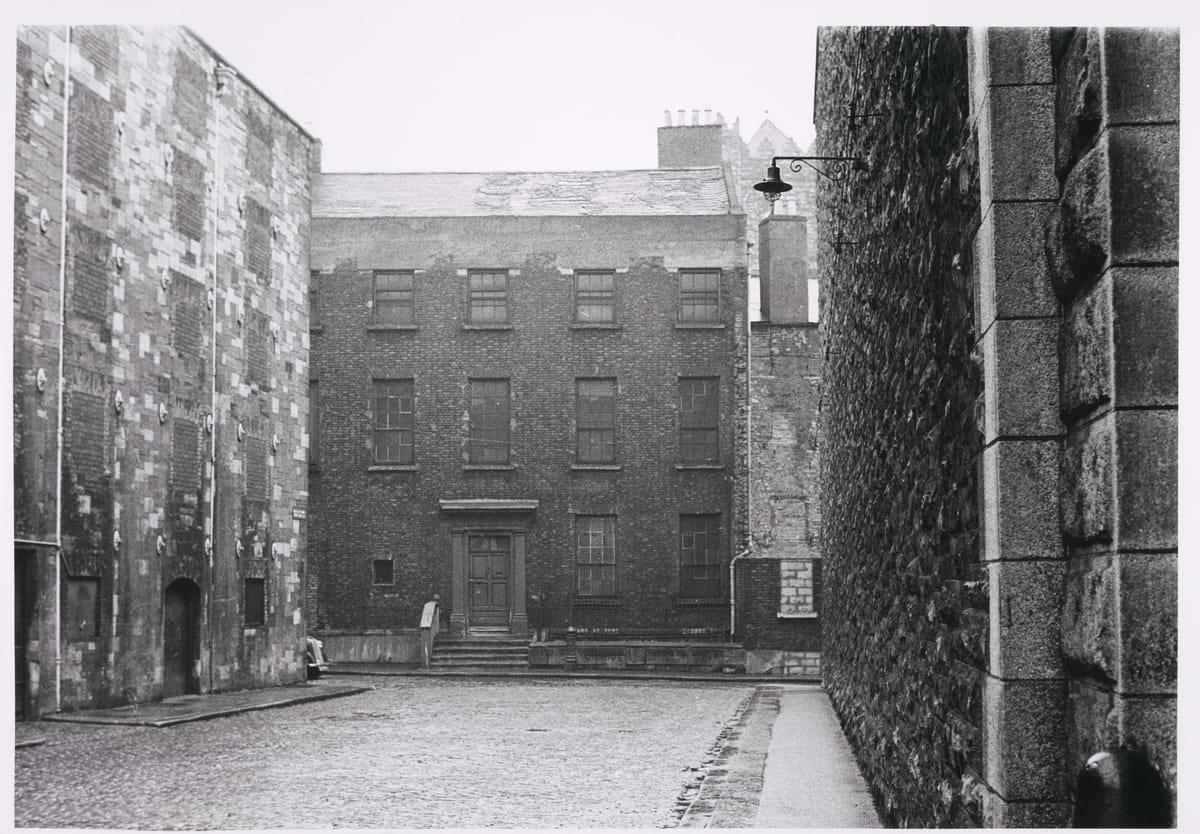
Photograph of Bow Street, Dublin, taken by Paddy Healy in 1966. In this view from New Church Street to Bow Street, the Jameson Distillery building on the left and St Michan’s Church, the tower of which is just visible, are the only survivors.
Bow Street, 1966 (PH 32/1)
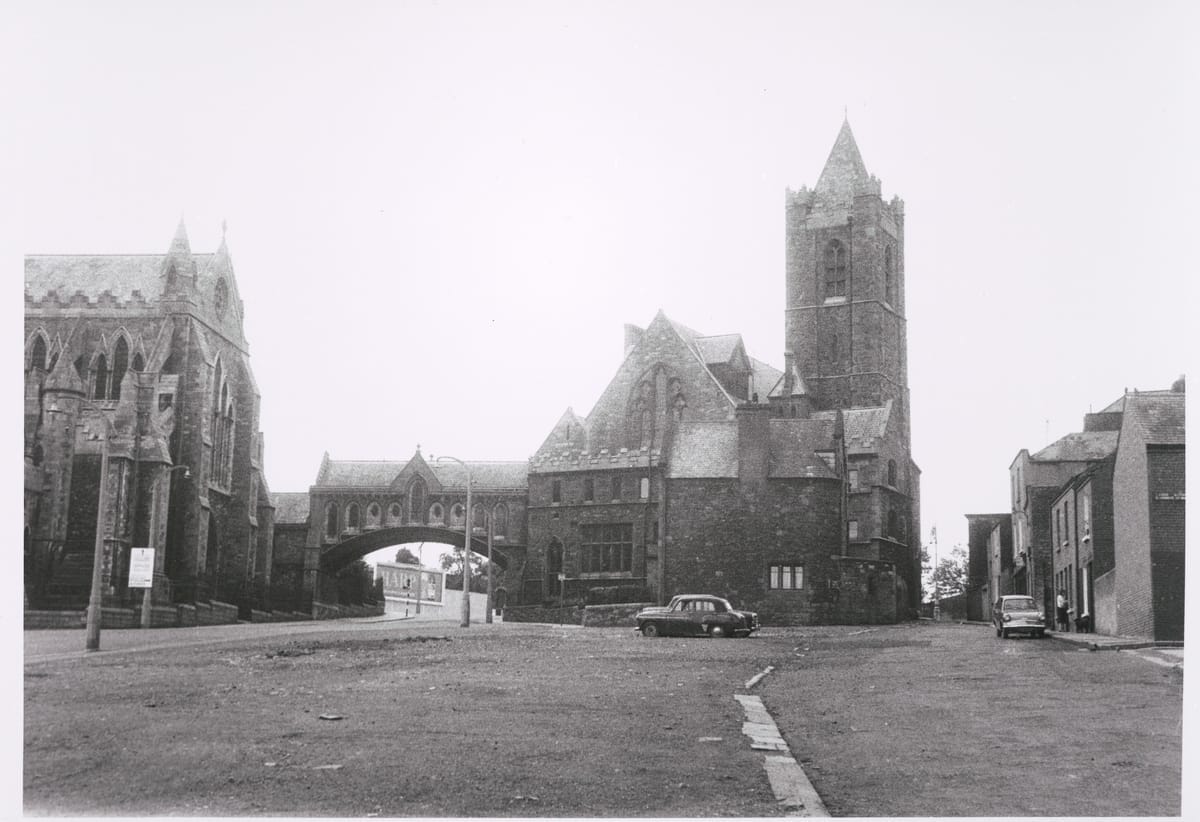
Photograph of Christ Church Cathedral and Synod House, Dublin, taken by Paddy Healy in 1965. Christ Church Cathedral and the Synod House stand in shocking isolation caused by the demolition of most of Winetavern Street for road widening.
Christ Church Cathedral and Synod House, 1965 (PH 66/4)
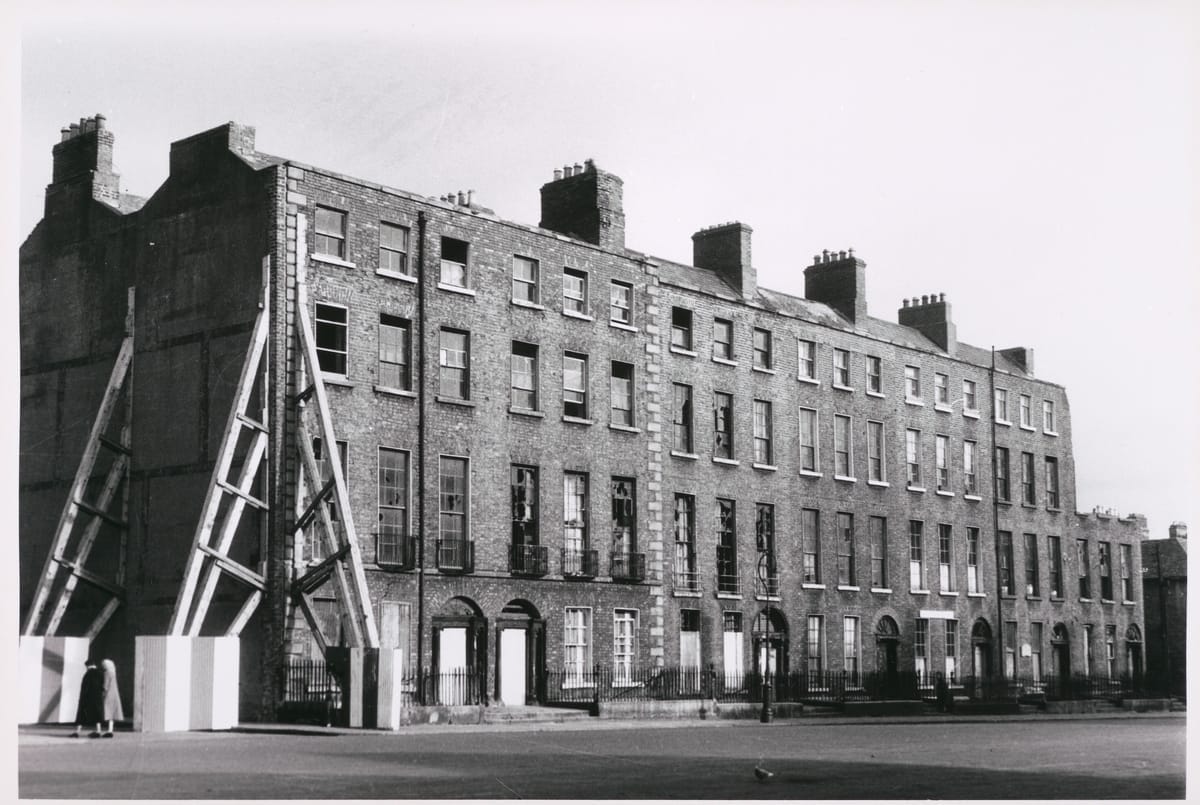
Photograph of Blackhall Street, Dublin, takenn by Paddy Healy in 1964. Blackhall Street was laid out in 1782 to create a vista of the Blue Coat School and was completed by 1800. None of these houses inthe photograph survived the street's redevelopment.
Blackhall Street,1964 (PH 27/6)

Previous Exhibitions

2026

Paddy Healy’s Dublin

Villa Tugendhat

The trackmaker was a sluggish mover: a solo exhibition by Bryony Dunne

2025

Artists and Pirates

Studio by Harry Moore

A Form of Justice: the Four Courts Marshalsea, Dublin

The Architect as Artist: Paintings by Brendan Millar

Ireland House Tokyo

Karl Burke

to be filled

2024

Best Laid Plans: an exhibition by visual artist Mandy O’Neill

The Charm of K-Art

Neighbours in Space and Time: Grafton Architects at Sir John Soane’s Museum

The FNCI at 100

Chemins de migration

2023

The Coiffured

Little Republics

Remaking the Crust of the Earth

The Architecture of al-Andalus: Photographs by Michael Barry

Stirling Wilford and Associates, 1980-2000

Buildings End: An Ultimology Drafting Room

Architectural Presidents

Follow us

  • Facebook
  • Instagram
  • Linkedin

Address

45 Merrion Sq.
Dublin 2
D02 VY60

Contact

01 663 3040
info@irisharchitecturalarchive.ie

English | As Gaeilge

  • English

Opening Hours

Reading Room

10am-5pm, Tuesdays to Fridays; Mondays by appointment

Exhibitions

10am-5pm, Mondays to Fridays

Newsletter

Stay in touch, receive updates about exhibitions and events

Subscribe

English | As Gaeilge

Menu
  • Catalogue
  • Dictionary of Irish Architects
  • About Us
    • About
    • Board
    • Members
    • Staff
    • Annual Reports
    • Contact
  • Our Collections
    • Collections
    • Online Catalogue
  • Our Exhibitions
    • Current Exhibitions
    • Past Exhibitions
  • Our Building
    • No. 45 Merrion Square
    • Venue Hire
  • Access
    • Visit
    • Reading Room
  • Support us
    • Donate
    • Major Sponsors
Search this site

Subscribe

* indicates required

The Irish Architectural Archive will use the information you provide on this form to send you its regular Newsletter. Please confirm that you would like to hear from us:

You can change your mind at any time by clicking the unsubscribe link in the footer of any email you receive from us, or by contacting us at info@iarc.ie. We will treat your information with respect. By clicking below, you agree that we may process your information in accordance with these terms.

We use Mailchimp as our marketing platform. By clicking below to subscribe, you acknowledge that your information will be transferred to Mailchimp for processing. Learn more about Mailchimp's privacy practices.

  • English